




Short on Time
Whether you spend most of your time reading articles, contributing to forums, or watching videos on horology, you’ve likely noticed the sheer amount of abbreviations circulating the internet, so much so that we tend to speak in a language dense with letters, numbers, and acronyms when talking watch specs. We have COSC, the official Swiss testing institute that ensures a bare watch movement ticks accurately before it ever sees a case; and we have ISO, which outlines the physical standards for things like water resistance and shock protection. Then, amongst the alphabet soup, we have METAS, which can feel daunting to any newcomer looking to decipher the highly technical spec lists that accompany watch listings online. But when giants like Omega and Tudor decide to adopt this certification, everyone pays attention. In this article we will give you some background and what goes into the METAS Master Chronometer certification.
For those of you who really want to get an on-the-ground feel for how it's done, make sure to check out our video in which we go inside Tudor's state-of-the-art manufacture in Le Locle, Switzerland here.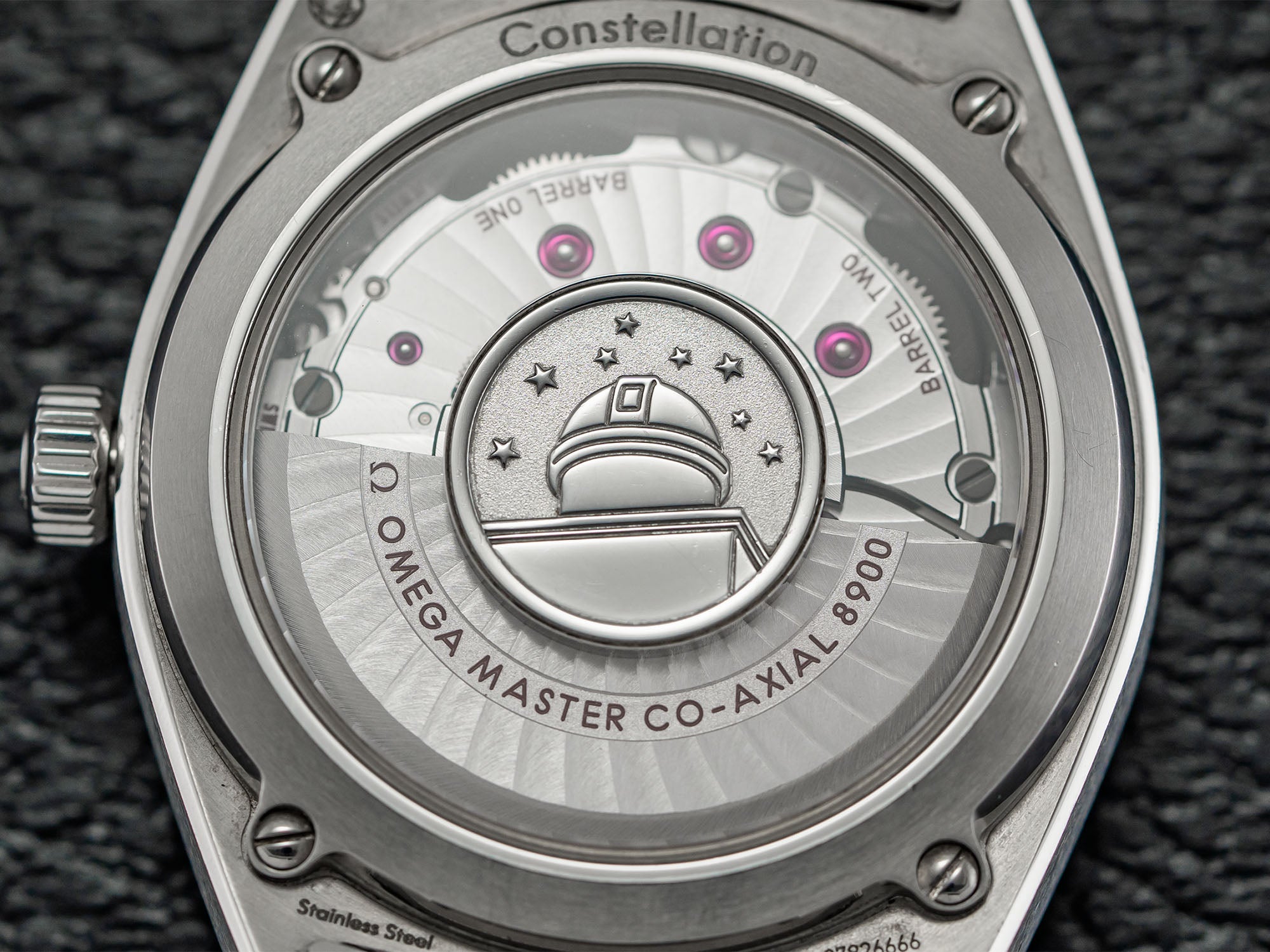

Before METAS: The Quest for the Perfect Second
It has taken hundreds of years to standardize watchmaking. Precision wasn’t always about luxury or prestige but a matter of life and death. During the 18th century, keeping accurate time at sea was the only way to effectively calculate longitude. In fact, the British government even offered a king’s ransom to anyone who could solve the longitude problem, a challenge taken up by self-educated English carpenter and clockmaker John Harrison with his marine chronometer, H4, in 1759.

From that moment on, the term “chronometer” became hallowed ground in horology and a title reserved for high-precision timekeepers only. As watches moved from the wooden boxes of maritime navigators to the pockets and wrists of the general public, the need for independent testing remained. By the mid-19th century, astronomical observatories in places like Geneva and Neuchâtel began conducting grueling chronometer competitions, which essentially became the Olympics of watchmaking. Brands would submit specially tuned, highly regulated movements to be tested over weeks. But the problem was that these observatory trials weren’t designed to certify mass-produced watches. Therefore, as the Swiss watch industry industrialized and output increased, the need for a broader, more standardized way to test watches at scale rose.
This led to the establishment of the official Swiss testing bureaus in the late 19th century, which eventually consolidated in 1973 to form the Contrôle Officiel Suisse des Chronomètres. That’s where the COSC acronym came from. For decades, achieving a COSC certificate was considered the absolute gold standard for mechanical reliability; now it’s much more common.
The COSC Baseline


To pass the test and earn the title of chronometer, the movement must maintain an average daily rate of -4 to +6 seconds per day. Out of the millions of watches produced in Switzerland every year, only about 6% achieve this certification. But there’s a catch. COSC tests the movement naked, not inside the watch case. It has no hands attached to it and no dial. Furthermore, it doesn’t test for magnetism. This is where METAS enters the picture. Omega, alongside the Swiss government, soon realized that a more thorough test could be conducted that took into account all the factors that COSC certification doesn’t.
The Swiss Federal Institute of Metrology

Tracing its roots back to the late 19th century, METAS is the ultimate authority on all things measurement in Switzerland. Operating out of its headquarters in Wabern bei Bern, it’s the government institute called in whenever a metric needs to be legally and scientifically watertight. Acoustics, electrical energy, radiation, gas analysis, speed camera calibration — you name it, METAS tests it.
When Omega first unveiled its ambitious new "Master Chronometer" standard back in December 2014, the announcement initially left a significant portion of the watch community scratching their heads in confusion. Many collectors were mistaken in thinking that Omega had simply invented its own private testing company to pat itself on the back. In reality, the watchmaker had collaborated with METAS to establish new testing parameters for its watches. This Master Chronometer designation is entirely independent, and any Swiss watchmaker willing to put its timepieces through the absolute wringer can have them tested to METAS standards. The institute's testing laboratories can even sit physically within a brand's own manufacture, as they do in Omega's facilities in Biel and Tudor's new, state-of-the-art manufacture in Le Locle.

To enter the METAS testing phase, a watch must be fundamentally Swiss Made, already possess a COSC certification, and the testing must be performed by a laboratory with the specific ISO and IEC accreditations. Once those hurdles are cleared, the real torture begins.
The Invisible Threat of Magnetism

Today, METAS attacks this problem head-on by requiring the watch to withstand a staggering magnetic field of 15,000 gauss. To put that into perspective, that’s roughly the magnetic force generated by a standard medical MRI machine. The only way to survive this level of magnetism is to build the movement itself out of antimagnetic materials, which is why Omega Master Chronometer certification relies so heavily on the brand’s proprietary co-axial escapement and the Si14 silicon balance spring. Silicon is completely impervious to magnetism, which explains why Tudor achieves similar results using its own silicon hairspring technology.
The 10 Cycles of the Master Chronometer Gauntlet
The METAS test involves 10 distinct testing cycles spread out over the course of 10 days and, unlike COSC, tests the fully assembled, cased-up watch. The trial begins with the fully wound movement being exposed to 15,000 gauss magnetic fields, where a microphone listens to the movement to ensure it doesn’t stop ticking during that time. In the next cycle, the entire watch is subjected to that same immense magnetic field.

Over the subsequent cycles, a watch is subjected to a simulation of real-world wear. It’s placed into machines that rotate it through six different spatial positions and varying temperatures to ensure the lubricants and microscopic components maintain their stability. Throughout these positional and temperature shifts, the timekeeping is constantly measured. The threshold for success here is significantly tighter than the COSC baseline. While COSC allows a movement to run anywhere from -4 to +6 seconds a day, a METAS Master Chronometer is not allowed to lose a single second. The tolerance is strictly 0 to +5 seconds per day.
METAS testers also fully wind the watch and let it run completely dead to verify the exact power reserve. If the brand claims the watch has a 70-hour power reserve, METAS ensures it runs for exactly seventy hours, down to the minute. Furthermore, it tests the watch's isochronism, ensuring the watch keeps consistent time regardless of how much energy is left in the mainspring. When a watch is fully wound, the mainspring delivers high torque, giving the balance wheel a wide, healthy swing. As the power reserve drains, the torque drops, the amplitude decreases, and traditional watches tend to run faster or slower. METAS tests the watch's accuracy at 100% power, and then again when the power reserve is drained down to ensure it maintains strict accuracy even when it’s running on fumes.
 Finally, the fully assembled watch is subjected to a grueling water resistance overpressure test, which goes 25% beyond the watch’s depth rating. If a dive watch is rated for 200 meters, it’s tested to withstand the pressure of 250 meters and held at this extreme pressure, ensuring no single microscopic molecule of moisture breaches the gaskets.
The Brands Championing the Standard


 In 2023, Tudor inaugurated their new manufacturing facilities in Le Locle, boasting high tech features to streamline production, and ensure tight quality standards. The facilities use automated processes in addition to skilled human hands, in what represents a wonderful marriage of old-world watchmaking and modern technology, all in the service of getting every detail right. These exacting standards will allow Tudor to scale their ambitious accuracy goals to broader sections of their catalog.
While other manufacturers choose different paths (Grand Seiko via Spring Drive, Zenith with high-beat precision, and Nomos through traditional German chronometry), the engineering required to pass this gauntlet remains a complete triumph. Even for a traditional 36mm-dress-watch purist, this level of modern micro-mechanics commands absolute respect.
Why Should the Everyday Enthusiast Care about METAS?

METAS certification delivers the ultimate peace of mind; a Master Chronometer that ensures you don't have to baby your watch. It withstands laptop magnetic fields, airport scanners, and handbag clasps without skipping a beat. Furthermore, it stands for transparency in a watch. A timepiece with METAS certification gives you access to its exact testing data. This accountability yields tangible benefits for you as the wearer, promising a superior level of robustness and a full five-year warranty, among other things. If nothing else, it serves as a scientifically verified promise that your mechanical companion is practically bulletproof against the magnetic minefield of modern daily life. You can learn more about METAS at their website here.


Be the first to leave a comment
Log in or to leave a comment