




Short on Time
Since the dawn of personalized timekeeping, watchmakers have striven for higher levels of accuracy in their timepieces — originally through optimizing the efficiency of traditional mechanical movements, and eventually, starting around the mid-20th century, with the invention of electronic, battery-powered, and other high-tech movement options. The most significant and impactful of the latter inventions is indisputably quartz movements, which in most respects have changed very little since they first came on the scene commercially in 1969. However, a handful of watchmaking innovators have not only managed to improve upon quartz but also used it as a platform for their own signature technologies, which have made the watches that use them more efficient than ever. Here we showcase five of these brands and their role in making the best high-accuracy quartz watches.
Seiko Astron GPS

Seiko revolutionized watchmaking accuracy with the original Quartz Astron in 1969, basically creating the category of quartz watches that still claims a significant share of the watch market today. The revival of the Astron model in 2012 represented another technological quantum leap, as the first analog wristwatch equipped with a solar-powered movement capable of receiving signals from GPS (global positioning system) satellites and instantly adjusting to any time zone on Earth. From a technology perspective, this combination of features set the new-generation Astron apart from other light-powered timepieces, like those powered by Citizen’s Eco-Drive calibers, and also from so-called “Radio-Controlled” watches, which receive time signals only when in range of terrestrial atomic clocks.

With the push of a button on the case, the Astron’s wearer can change the local time by synching the watch’s built-in antenna with GPS signals, and adjust for Daylight Saving Time with another button push. The time transmitted by these signals is incredibly accurate and reliable — losing one second approximately every 100,000 years — and the movement can be charged constantly, no battery changes required, as long as it is regularly exposed to sunlight — or any light, really. This 21st-Century version of the Astron is obviously something far beyond just quartz, and today it occupies an important place among Seiko’s marquee product families.
Grand Seiko Caliber 9F

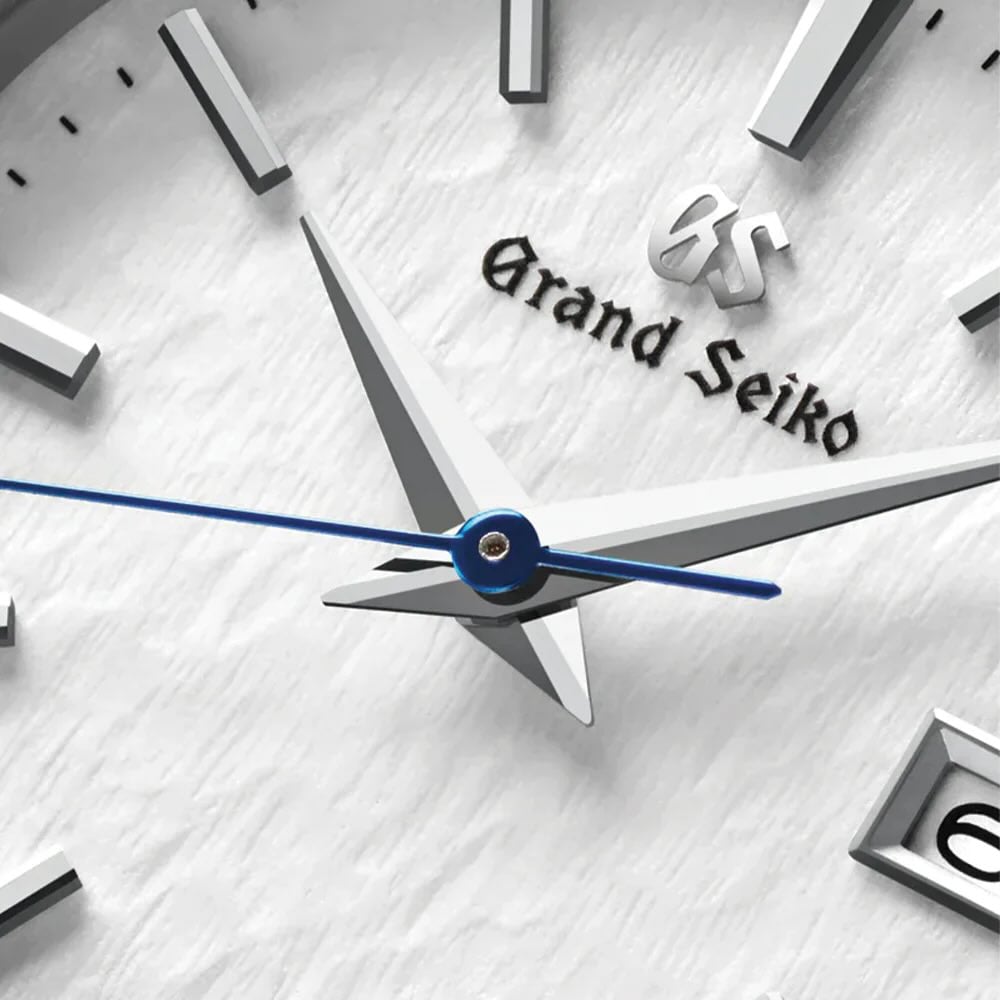
Grand Seiko, the luxurious sibling of Seiko, which brought the quartz movement to the mainstream of the watch industry, has appropriately brought its own high-end innovations to it. The first quartz caliber built specifically for Grand Seiko debuted in 1993, and it set new standards for durability, precision, and technical innovation that few other quartz movements could attain. Its special attributes included a Twin Pulse Control Motor that allows the minutes and seconds hand to extend to the edge of the dial for more precise timekeeping, a Backlash Auto-Adjust mechanism that eliminated shudder in the seconds hand, and a protective shield construction covering the gear train to prevent dust from entering. The three-hand version of the movement powers core models, including the entry-level SBGX261 (above).

Ensuring that Caliber 9F was truly an in-house mechanism from start to finish, and securing the highest possible level of quality control, the quartz crystals for the movement’s oscillators are grown on the premises of Grand Seiko’s autoclaves, and then regulated individually by an integrated circuit adapted specifically for each crystal. Caliber 9F remains the go-to high accuracy quartz movement for many of Grand Seiko’s time-and-date-only watches, and serves as the base for additional complications that followed, including the landmark Caliber 9F86 in 2018. This movement added a dual-time complication to the base caliber for the first time, all while maintaining all of the high-performance elements of the original mechanism. Grand Seiko installs this movement, which boasts an annual precision rate of +/- 5 seconds, inside several of its popular GMT models, like the Ref. SBGN027 above.
Citizen Eco-Drive Caliber 0100

Citizen made its own seismic contribution to timekeeping history with the introduction of the light-powered Eco-Drive technology, first introduced in a commercial product in 1996. The Japanese watchmaker took Eco-Drive to its pinnacle of precision with the introduction of Caliber 0100 in 2019. A high accuracy quartz Eco-Drive movement that calibrates time to an astonishing accuracy of +/- 1 second per year, it is the current record holder for the title of “world’s most accurate light-powered watch.” Distinguishing itself from Casio’s Multi-Band 6 watches and others, like Seiko’s Astron GPS models described above, Caliber 0100 achieves this unprecedented feat without relying on synchronized data from satellites or radio-controlled atomic clocks.
Instead, Citizen equipped the caliber with new AT-cut-type crystal oscillators, which vibrate at a frequency of 8.4 MHz, in place of the tuning fork-shaped oscillators used in most quartz movements. The former’s frequency is more than 250 times higher than the latter’s. The company also devised clever power-saving strategies for the movement, using materials and designs that can generate the much greater amounts of energy that the new oscillators required while also ensuring the entire mechanism is resistant to outside influences such as temperature variations, gravity, and age degradation. The successful result is a dependably stable operation for up to six months on a single light charge, or eight months in its power-save mode. The watch can even continuously monitor and adjust for frequency and temperature shifts once per minute, and will automatically correct the hand positions after the watch is subjected to shocks.

Citizen rolled out Caliber 0100 in three watches, all limited editions, measuring 37.5 mm in diameter and 9.1 mm thick. Two have cases and bracelets made of Citizen’s Super Titanium, both of which are treated with the brand’s proprietary Duratect surface hardening process. The most exclusive of the trio has an 18k white gold case, a cream-colored dial, and a black crocodile leather strap with tone-on-tone stitching. Its elegantly understated dial speaks to the watchmaking motto that it embodies: interior complexity and innovation in the service of exterior legibility and the be-all-end-all of dependable timekeeping accuracy.
Bulova Precisionist
 Bulova, founded in New York City in 1875 by Bohemian immigrant Joseph Bulova, was one of the first watchmakers in the world to seriously explore the development of electronics in wristwatch movements. In 1960, Bulova unveiled the groundbreaking Accutron Spaceview 214. The watch took its numerical designation from its movement, Caliber 214, a revolutionary mechanism in which the balance wheel, which drives the timekeeping in a mechanical movement, was replaced by a tuning fork, powered by a one-transistor electronic oscillator. This system ensured an oscillation rate of 360 hertz — nearly 150 times faster than that of a mechanical-powered timepiece — and promised an accuracy to just one minute per month, an unprecedented precision level that inspired the name Accutron, for “Accuracy through Electronic.” Accutron became a core product in the Bulova lineup before spinning off to become its own brand in 2020 (modern Spaceview edition pictured above).

In 2008, Japan’s Citizen Watch Co. (no newbie to accuracy-enhancing innovations, as seen above) acquired Bulova and prompted the development of the company’s most significant invention since the original Accutron movement. Designed to be “the world’s most accurate quartz watch with a continuously sweeping seconds hand,” and used exclusively in Bulova watches, the Bulova Precisionist caliber has an oscillator that vibrates at 262,144 times per second, eight times as fast as a standard quartz crystal, which equates to a precision of +/- 10 seconds per year. The oscillator has three prongs instead of the standard two and functions as a “torsional resonator,” meaning that instead of vibrating back and forth like a standard quartz-watch oscillator, the prongs twist like the strings of an electric guitar.
Unlike other high accuracy quartz watches that rely on external time signals, like the atomic clocks covered above, or need to be recalibrated after a battery change, Precisionist watches use easily replaceable lithium ion batteries like those in other quartz timepieces. Among the most popular Bulova models outfitted with a Precisionist movement are the Lunar Pilot Chronograph ("Blood Moon" edition above), a contemporary re-issue of a watch worn on a NASA space mission in the early 1970s, and the retro-sporty Jet Star (below), a revival of a cult-classic timepiece from 1973.

Breitling Thermocompensated SuperQuartz
Starting in 2014, Breitling, which had been sourcing movements from ETA for its high-tech quartz-powered Professional watches like the Emergency, introduced its own ultra-accurate SuperQuartz calibers, with a patented, Thermocompensated design that make them 10 times more accurate than most quartz calibers i.e., within 10 seconds per year. Breitling SuperQuartz calibers support both analog and digital functions and have been installed in watches like the Exospace connected watches and the “athleisure”-focused Endurance Pro models (below) launched in 2020.

The Endurance Pro collection now includes the “Ironman” editions that Breitling rolled out in 2021, as part of the Swiss watchmaker’s partnership with the Ironman series of endurance sporting events. The watch’s 44mm case is made of Breitlight, a proprietary polymer material that is significantly lighter than both steel and titanium but harder and more resistant to corrosion and scratching. The Breitling 82 “SuperQuartz” movement powers the hours, minutes, seconds, calendar and chronograph functions displayed on the black-and-red dial along with the Ironman logo at 6 o’clock. The ratcheting Breitlight bezel is inscribed with compass indications for an additional layer of sporty functionality, and the logo appears again on the solid caseback and the textured rubber strap.


2 Comments
Log in or to leave a comment
No Astron in the Shop section??
Also—different topic—when are you publishing the actual manual-wind article?
Log in or to reply
What about the longines vhp?
Log in or to reply